
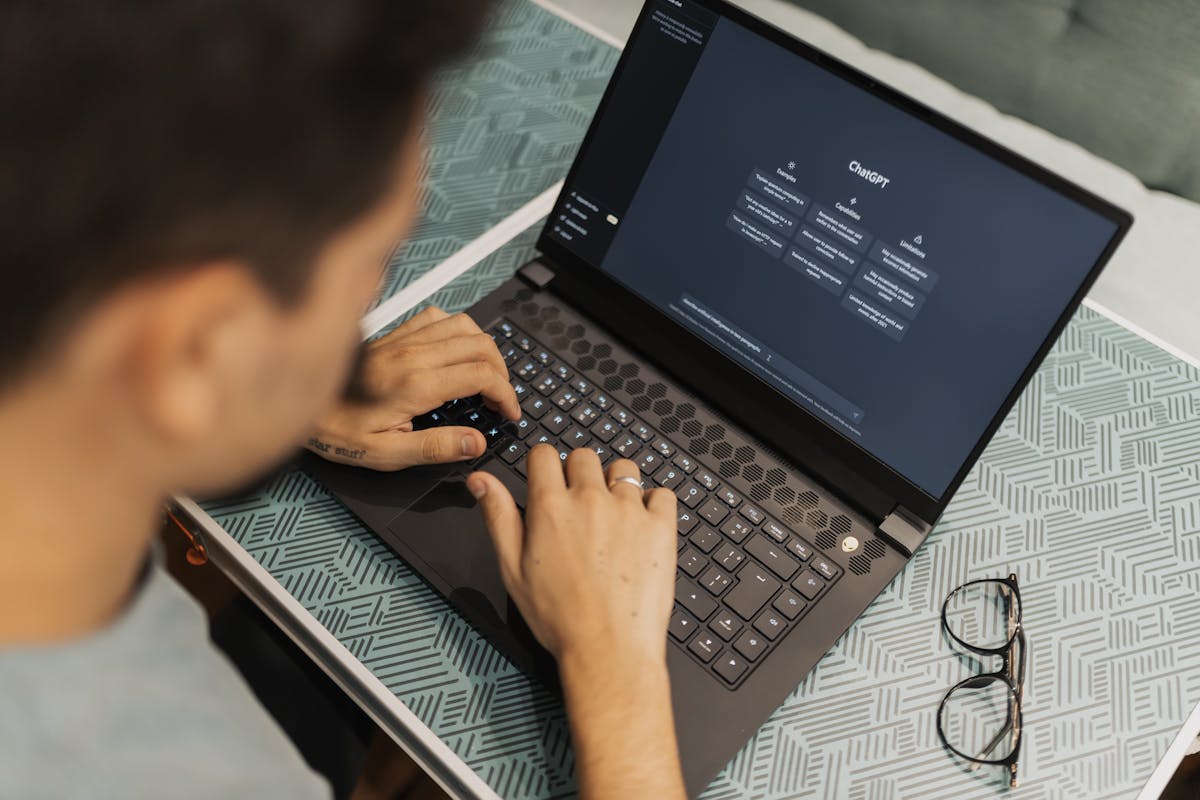
LLM SEO for Small Businesses in Delhi NCR: How to Get Cited by AI in 2026
LLM SEO is the practice of shaping your website, content, and entity signals so that large language models like ChatGPT, Claude, Gemini, and Perplexity cite your business when they answer a user prompt. For small businesses in Delhi NCR, this matters because more than half of buyers in Gurugram, Noida, Faridabad, Ghaziabad, and Delhi now ask an AI assistant before they ever open Google. If your CA firm, clinic, salon, or boutique factory is not named inside those answers, you are invisible to a fast-growing slice of the market. This guide explains what LLM SEO is in plain terms, how AI engines actually pick sources, why a small Noida or Gurugram operator can beat enterprises on this channel, and a 60-day plan with realistic rupee costs to start showing up.
What LLM SEO actually means (in plain Hindi-English)
LLM SEO is the work of making your business easy for ChatGPT, Claude, Gemini, and Perplexity to recognise, trust, and cite when answering a user prompt. It uses the same core moves as SEO, but adds clean schema, real bylines, Indian directory listings, and credible citations so the AI confidently names your brand inside the answer.
Traditional SEO is about ranking a blue link. LLM SEO is about getting your brand named inside the AI's spoken or written answer. If a Sector 49 Gurugram resident asks ChatGPT, "best CA for startup ITR filing near me", a single sentence of synthesised text comes back, with two or three firm names and links. LLM SEO is the discipline of making sure one of those names is yours.
The mechanics are different from old Google SEO in three ways. First, the AI does not show ten results, it picks one to five. Second, it weighs entity signals (is this a real, verifiable business) almost as heavily as content quality. Third, it pulls from multiple sources including your website, Google Business Profile, JustDial, IndiaMART, Sulekha, Wikidata, LinkedIn, and Indian press mentions, then stitches them into a single answer. That stitching pattern is why niche depth beats domain authority on AI search.
How LLMs actually retrieve and cite sources
Each major engine has a slightly different stack, but the working model is the same.
| Engine | How it retrieves | What it cites |
|---|---|---|
| ChatGPT (browsing) | Bing index plus selected partners and web crawl | 2 to 5 direct URLs, named in footnotes |
| Claude | Web search via partner index, citation-first design | 3 to 6 sources, often inline |
| Google Gemini and AI Overviews | Google index, knowledge graph, Maps and Business Profile | 3 to 8 sources, with site-name pills |
| Perplexity | Sonar live index, very fresh crawl | 5 to 10 inline citations |
What this means in practice is that LLMs do not write from memory alone for local or commercial queries. They retrieve a small set of trusted sources, summarise them, and credit them. Your job is to be one of those trusted sources. That happens through a mix of being on the right indexes, having clean machine-readable signals, and earning enough corroboration across the wider web that the engine feels safe naming you.
If you want the upstream theory behind this, the 2026 guide to GEO for Indian businesses covers the academic foundations and the broader ranking signal set. This article focuses on the small-business execution layer.
Why small businesses can beat enterprises here
On traditional Google SEO, a Delhi NCR small business is usually outgunned by national portals and listing sites. On LLM SEO, the picture flips, for four reasons.
- Niche depth beats domain authority. LLMs reward pages that answer one specific question completely. A 1,200 word page on "GST registration cost for proprietorship in Gurugram" written by a real CA can outrank a 50,000-page national directory because the national page has no depth on that exact prompt.
- Real entity signals are cheap to build. A clean About page, GST and CIN on Contact, founder photos, real LinkedIn profiles, and a Wikidata entry take a weekend, not a quarter.
- Indian directories punch above their weight. ChatGPT, Claude, and Perplexity actively pull from JustDial, IndiaMART, and Sulekha for local prompts. A complete profile on those three is free and moves citations within weeks.
- You can write in real operator voice. Enterprise content reads like committee work. A founder writing the way they actually speak to clients reads more credible to an LLM that has been trained to spot generic content farms.
The cheap moves that work in Delhi NCR
These are the high-impact moves that cost little or nothing and deliver disproportionate LLM SEO gains for a Gurugram, Noida, Faridabad, Ghaziabad, or Delhi operator.
1. Clean Article and FAQPage schema on every page
Add Article schema to every blog post and FAQPage schema to every page with Q and A blocks. Add LocalBusiness schema on your Contact page with full address, phone, email, opening hours, and geo coordinates. Validate every page using Google's Rich Results Test. This is the single highest-impact technical move you can make, and it costs only your time.
2. Named-author bylines with real LinkedIn profiles
Replace any "Admin" or "Team" bylines with the real founder or senior staff name, photo, role, and a link to their LinkedIn. Add Person schema. LLMs are trained to demote anonymous content. A real Noida dentist or Gurugram CA writing under their own name is treated as a more trustworthy source than a faceless blog.
3. Indian PR mentions
You do not need an Inc42 cover story. A single quote in YourStory, ETtech, Mint, Moneycontrol, The Print, or Analytics India Magazine inside the next 90 days will move the needle. Pitch two to three sharp paragraphs of operator commentary on a current topic in your niche. Indian editors are starved for real founder voice. Budget zero to 15,000 INR for a freelance PR helper if you want to speed this up.
4. Wikidata entry
Create a Wikidata entry for your business. Add founder, founding date, headquarters city (Gurugram, Noida, Faridabad, Ghaziabad, or Delhi), industry, and at least three citation links to your own website, LinkedIn, and any press mention. LLMs are pre-trained on Wikidata, so a single clean entry has outsized influence on how AI engines describe your brand.
5. Complete JustDial, IndiaMART, and Sulekha listings
Make sure your name, address, phone, services, and business description are identical across JustDial, IndiaMART, and Sulekha. This Name-Address-Phone (NAP) consistency is what lets LLMs corroborate that you are a real business. Inconsistent listings actively hurt your AI visibility.
6. Optimised Google Business Profile
Fully fill out your Google Business Profile with all services, opening hours, real photos of your office or shop, a complete description, and at least 25 reviews. Google AI Overviews and Gemini lean heavily on Business Profile data for any "near me" or city-modified prompt.
7. Structured FAQs on every service page
Add a frequently asked questions block at the bottom of every service page, with four to six questions, 40 to 80 words each, marked up with FAQPage schema. Copy your actual questions from Google's "People Also Ask" panel. LLMs love to quote these blocks because they are ready-made answers.
A budget-friendly 60-day plan in INR
Here is a realistic 60-day LLM SEO plan for a Delhi NCR small business with a budget under 50,000 INR total.
| Days | Action | Estimated cost (INR) |
|---|---|---|
| 1 to 7 | AI visibility audit. Run 20 prompts in ChatGPT, Claude, Gemini, Perplexity. Document who gets cited. | 0 |
| 8 to 14 | Rewrite About, Services, Contact. Add Organization, LocalBusiness, Person schema. | 0 to 8,000 |
| 15 to 21 | Create Wikidata entry. Update LinkedIn. Refresh Google Business Profile. | 0 |
| 22 to 35 | Publish four pillar pages, each 1,500 to 2,000 words, answer-shaped, with FAQ schema. | 12,000 to 20,000 |
| 36 to 45 | Complete and verify JustDial, IndiaMART, Sulekha listings. Match NAP exactly. | 0 to 4,000 (premium listings optional) |
| 46 to 55 | Pitch two expert quotes to YourStory, ETtech, Mint, or Analytics India Magazine. | 0 to 10,000 (freelance PR optional) |
| 56 to 60 | Re-run AI visibility audit. Measure citations gained. | 0 |
Total realistic cost for a 60-day programme: 12,000 to 42,000 INR. The same outcome bought through a national agency retainer would typically cost 80,000 to 1,50,000 INR per month.
Tools to track AI citations (free and paid)
- Manual prompt log (free). A simple Google Sheet with 20 prompts and a monthly column. Re-run the prompts at the start of each month and tick who gets cited. This is the most honest tracker, and most agencies still use it.
- Otterly.AI (paid). Tracks your brand mentions across ChatGPT, Perplexity, and Gemini answers. Plans from around 29 USD per month.
- Profound (paid). Enterprise-grade AI search visibility tracking. Useful once you scale.
- AthenaHQ and Goodie AI (paid). Newer Indian and US tools tracking brand citation rate inside LLMs.
- Google Search Console and Bing Webmaster (free). Still essential. Many AI engines retrieve from Bing or Google indexes, so being well-crawled here is the upstream control.
Five mistakes Delhi NCR small businesses keep making
- Stuffing every page with "Gurugram, Noida, Faridabad, Ghaziabad, Delhi". LLMs flag prompt-engineered pages. Pick the one city you want to win on a page and write naturally about it.
- Using fake authors. "Content Team" or "Admin" tells the LLM you are a content farm. Use real bylines.
- Skipping JustDial and IndiaMART because they "look downmarket". They feed ChatGPT and Perplexity. Skipping them is leaving free AI visibility on the table.
- Inconsistent NAP. Your phone is +91 99999 11111 on the website, +91 9999911111 on JustDial, and +91 99999-11111 on IndiaMART. Pick one format and use it everywhere.
- Writing thin city pages. A 300-word "We serve Gurugram" page is worse than no page. LLMs prefer one deep page over five shallow ones.
A real-world example: a Gurugram CA firm
Consider a fictional but realistic example. A two-partner CA firm in Sector 44 Gurugram, founded in 2019, with a website that ranks on page two of Google for "CA in Gurugram" and zero presence inside ChatGPT or Perplexity in March 2026.
Over 60 days, the firm runs the plan above. They rewrite About and Services with full schema, add a real founder byline on every page, create a Wikidata entry, complete JustDial and IndiaMART listings, publish four pillar pages ("GST registration for startups in Gurugram", "ITR filing for salaried professionals in Gurugram", "ROC compliance for private limited in Gurugram", "GST refund for exporters from Gurugram"), and pitch one expert quote to Inc42 on Budget 2026 compliance changes.
By day 45, Perplexity is citing them on three of the four pillar prompts. By day 75, ChatGPT browsing mode names them on "best CA for startup GST registration in Gurugram". By day 100, Google AI Overviews include them on two queries. Direct phone enquiries from the website rise from four a week to eleven a week, and the founders attribute roughly half the new leads to "they saw us on ChatGPT or Perplexity first". Total spend across 60 days was 38,000 INR, mostly on a freelance writer for the four pillar pages.
That is the order-of-magnitude outcome a focused Delhi NCR small business can expect when they run this honestly. The wider 2026 SEO guide is still useful as the foundation, and our Gurugram GEO agency page covers what done-for-you work looks like if you would rather hand it off.
What to do this week
If you take only three actions from this article, take these:
- Open ChatGPT, Claude, Gemini, and Perplexity. Run the 10 prompts your best customer would type. Write down who gets cited. That is your starting line.
- Add Person schema and a real founder byline to every page that currently says "Admin" or "Team". This single move will lift your trust signals across every LLM.
- Pick one cluster of three to four prompts you want to own (for example, all "ITR" prompts for Gurugram, or all "Invisalign" prompts for Noida). Plan four pillar pages that own that cluster.
LLM SEO is in the rare window where the playbook works, the tools are mature, and most of your competitors in Delhi NCR are not running it yet. The brands that move now will own AI citations across their city and category for the next two to three years, and the brands that wait until 2027 will spend the rest of the decade buying back ground they could have taken for free in 2026. If you need a partner to run this end to end, our services page lays out exactly what that engagement looks like.
References & further reading
Looking for hands-on help in this market? Visit our SEO agency in Delhi page for local pricing and packages.
Need Help Getting Cited by ChatGPT and Perplexity?
At Mayank Digital Labs, we help Delhi NCR small businesses get cited inside ChatGPT, Claude, Gemini, and Perplexity through structured LLM SEO audits, schema rollouts, entity-page builds, Indian directory cleanup, and answer-shaped content. We run this playbook for CA firms, clinics, D2C brands, and B2B services across Gurugram, Noida, Faridabad, Ghaziabad, and Delhi, and we report citations gained, not just keyword positions.
No commitment. Just a 30-minute call.

Frequently Asked Questions
What is LLM SEO for small businesses?
LLM SEO is the practice of structuring your website, content, and entity signals so that large language models like ChatGPT, Claude, Gemini, and Perplexity cite your business when they answer a user prompt. For small businesses, it focuses on niche depth, clean schema, real author bylines, and credible Indian citations rather than expensive link building or paid distribution.
How much does LLM SEO cost a small business in Delhi NCR?
A Delhi NCR small business can run a usable LLM SEO programme on 15,000 to 40,000 INR per month, depending on whether you write content in-house or hire freelancers. The core cost sits in writer fees and a small PR budget for Indian outreach. Schema, listings, Wikidata, and Google Business Profile work is largely free once you know what to do.
Can a Gurugram or Noida small business outrank a national brand on ChatGPT?
Yes, and it happens often. LLMs reward niche depth and original local data, not just domain size. A focused Gurugram CA firm or a Noida dental clinic that publishes specific, well-structured answers about its city and service can get cited inside ChatGPT and Perplexity ahead of much larger national directories that publish thin, generic pages.
Which AI engines should a Delhi NCR small business optimise for?
Start with ChatGPT, Perplexity, and Google Gemini AI Overviews because they drive the bulk of Indian AI search volume in 2026. Claude is the next layer, especially for B2B and professional services. Optimising for one usually lifts the others, since they share the same underlying signals: schema, authority citations, and clear entity pages.
How long before LLM SEO starts working for a small business?
Perplexity citations usually appear within 30 to 45 days because it indexes the live web aggressively. ChatGPT browsing citations follow within 60 to 90 days. Google AI Overviews can take 90 to 120 days because they depend on traditional ranking strength. A new domain will sit at the longer end of these ranges until basic authority signals build up.
Do JustDial, IndiaMART, and Sulekha listings help LLM SEO?
Yes, more than most operators expect. ChatGPT, Claude, and Perplexity all pull from these Indian directories when answering local queries about Gurugram, Noida, Faridabad, Ghaziabad, and Delhi. A complete, consistent JustDial, IndiaMART, and Sulekha profile that matches your Google Business Profile and website gives LLMs the corroborating signals they need to cite you with confidence.