
AI Scriptwriting in Bollywood: How Indian Films Are Using AI for Story Development
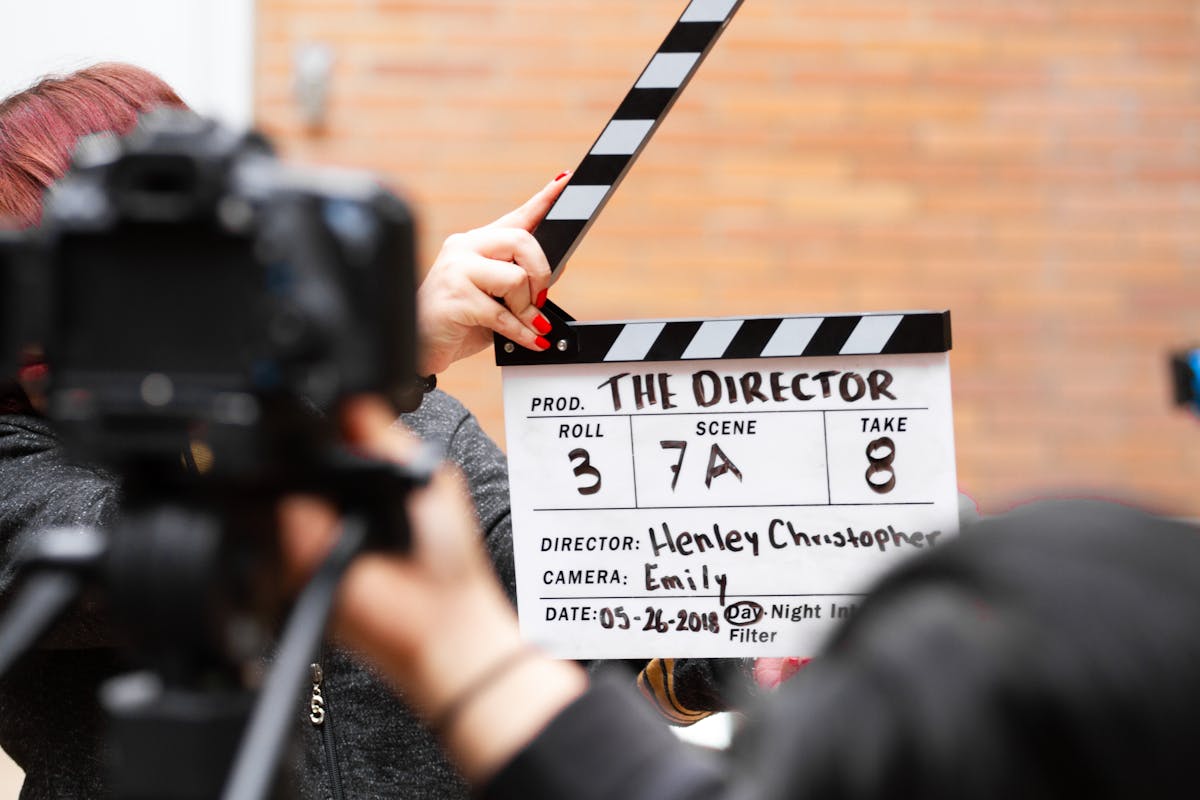
At a writers' room somewhere in Andheri, Mumbai, a screenwriter types a prompt: "Give me five alternative endings for a revenge thriller set in rural Rajasthan." An AI responds in 15 seconds with five complete scene outlines. The writer reads them, discards three, tweaks the fourth, and uses the fifth as a starting point for a completely different direction that would not have occurred to them without the AI's left-field suggestion. This is not science fiction. This is how Bollywood writers are working in 2026 - quietly, without announcement, and with growing regularity.
What Is AI Scriptwriting?
AI scriptwriting is the use of artificial intelligence tools to generate story ideas, dialogue options, plot outlines, character arcs, and scene descriptions that writers use as starting material. AI does not write the final script independently - it acts as a tireless creative collaborator that generates raw material at speed.
The distinction is important. No major Bollywood production has announced a fully AI-written script. What is happening is AI-assisted development: writers use AI to break through creative blocks, explore story options quickly, generate first-draft dialogue for revision, and research historical or cultural context for scripts set in specific periods or regions. The human writer still decides what works, what resonates culturally, and what gets made.
Bollywood's Quiet AI Adoption: What Is Actually Happening
Indian film industry professionals are largely not public about their AI tool use, partly because the debate around AI and creative work is politically sensitive among writer communities. But the evidence of adoption is visible in several ways.
A 2024 survey of 200 Indian OTT and film writers by the Screenwriters Association (SWA) found that 43% had used AI tools at least once during a current project. Among writers under 35, that number rose to 61%. The tools used most frequently were ChatGPT, Claude (Anthropic), and Sudowrite.
Major production houses including Dharma Productions, Excel Entertainment, and Applause Entertainment have all reportedly used AI tools for at least some part of their development processes, according to industry reports from 2025. None have made public statements specifically about AI scriptwriting, reflecting the industry's careful positioning during a period when writer communities are watching closely.
Where AI Is Genuinely Useful in Indian Film Development
Story Brainstorming and Premise Development
The earliest stage of script development, finding a compelling premise, is where AI adds the most obvious value. A writer can feed an AI a genre, a setting, an emotional theme, and a time period, then ask for 10 different premise possibilities. Generating 10 quality premise options manually takes a writer a week of thinking. AI generates them in 30 seconds.
The writer then discards 8 of them and develops the 2 that feel right. The speed of premise generation dramatically increases the creative surface area that writers can explore before committing to a direction. For development executives at Netflix India, Amazon Prime Video India, and Disney+ Hotstar, AI-assisted premise generation has accelerated the pitch-to-development timeline.
Dialogue First Drafts
Dialogue writing is often the most time-consuming part of scripting. Every scene requires exchanges that feel natural, reveal character, and advance the plot simultaneously. AI tools trained on Hindi film scripts can generate first-draft dialogue options that writers then rewrite for authenticity and voice.
The key word is rewrite. AI-generated Hindi dialogue tends to be grammatically correct but occasionally misses the cultural texture that makes great Bollywood dialogue memorable. The AI gives you "Teri aankhon mein woh aag hai jo mujhe jala de" (grammatically fine, emotionally flat). A great writer transforms it into something that becomes the song of the season. The AI does the first draft. The writer does the actual writing.
Research and Period Accuracy
Historical films like Pathaan, Samrat Prithviraj, and Tanhaji require detailed research into specific periods, cultures, and events. AI dramatically accelerates this research phase. A writer working on a 1970s Mumbai underworld story can ask an AI to describe the slang, clothing, street food, political climate, and cultural references of that specific decade and neighborhood. What once required weeks of library research or expensive period consultants arrives in seconds.
Scene Outline and Structure
Plotting is a mechanical skill as much as a creative one. The three-act structure, the midpoint reversal, the dark night of the soul - these follow recognizable patterns that AI can apply effectively. For writers who have the emotional story but struggle with structural architecture, AI can propose scene-by-scene outlines that conform to successful story structures. The emotional content comes from the writer. The structural scaffold comes from AI.

The OTT Revolution and Why AI Matters More Now
The explosion of Indian OTT content has created extraordinary demand pressure on the writing community. Netflix India alone released over 80 original productions in 2024. Amazon Prime Video India, Disney+ Hotstar, SonyLIV, and Zee5 collectively released hundreds more. The demand for scripted content in Hindi, Tamil, Telugu, Malayalam, Marathi, and Bengali simultaneously has created a content volume that the traditional writers' room model cannot sustain alone.
A typical Bollywood feature film takes 1 to 3 years from idea to release. A successful OTT web series with 8 episodes of 40 minutes each requires approximately the same writing effort as a feature, but OTT platforms want to release 3 to 4 new series per month. The math does not work with traditional timelines. AI tools that compress the development cycle by 30 to 40% are not a choice for OTT original content - they are a survival tool for production companies trying to meet platform commitments.
AI in Regional Indian Cinema: Kollywood and Tollywood
While Bollywood gets the most attention in this conversation, Tamil and Telugu cinema are equally significant adopters of AI writing tools, and in some ways more advanced. The South Indian film industry has a tradition of high-concept action films with elaborate mythology and complex antagonists that require extensive world-building during development.
AI tools trained on Tamil and Telugu language corpora are generating usable story outlines and dialogue in those languages. The AI tools available in South Indian languages are still less refined than Hindi-English tools, but the gap is narrowing. Productions affiliated with Lyca Productions, AVM Productions, and Mythri Movie Makers have been reported as early adopters of AI research and story development tools.
The biggest current AI application in South Indian cinema is actually not scripting but dubbing and subtitle translation. AI dubbing tools that clone voice and lip-sync dubbed audio to match the original actor's mouth movements are being used to reduce dubbing costs for Hindi-dubbed Telugu and Tamil blockbusters, where audience expectations for quality dubbing are high.
The Writers' Fear: Will AI Hollow Out Bollywood's Creative Core?
The Screenwriters Association of India has taken a cautious but concerned position on AI. The SWA's concern is not with successful senior writers who have leverage to set terms with production houses, but with the 70% of Bollywood writers who earn under Rs. 5 lakh per year and whose entry-level work - story synopses, treatments, dialogue polish - is precisely the kind of task AI handles most effectively.
This mirrors the Writers Guild of America (WGA) strike of 2023, where AI became a central negotiating issue in Hollywood. The WGA ultimately won provisions that require studios to disclose when AI-generated material is included in a project and prevent studios from using AI to avoid minimum pay provisions. Indian writers have been watching that negotiation closely and several SWA leaders have called for similar protective frameworks in India.
The economic reality for junior writers is genuinely concerning. If a producer can generate a serviceable story treatment using AI in 2 hours instead of paying a junior writer Rs. 50,000 for the same treatment, many will do so. The quality of the AI treatment may be lower, but for lower-budget productions, "good enough" is often the standard. Mid-budget and high-budget productions will continue to need skilled human writers. The bottom of the market is where AI compression of writer income will be felt first.
Industry quote: "AI is like having an intern who has watched every film ever made, can write fast, and never gets tired. The problem is that the intern has no real understanding of why Mukesh Bhatt cried at the end of Aashiqui 2. That understanding is what makes Indian cinema what it is." - Anonymous senior Bollywood producer, quoted in Film Companion, 2025.
The AI Tools Indian Writers Are Using Right Now
| Tool | Best Use Case | Hindi/Indian Language Support | Pricing |
|---|---|---|---|
| ChatGPT-4o | Story brainstorming, dialogue drafts, research | Good Hindi, basic regional | $20/month (~Rs. 1,700) |
| Claude (Anthropic) | Long-form story development, character analysis | Good Hindi, limited regional | $20/month (~Rs. 1,700) |
| Sudowrite | Narrative fiction and scene writing | Limited Hindi | $19/month (~Rs. 1,600) |
| Gemini Advanced | Research, cultural context, fact-checking | Very good Hindi, improving regional | Rs. 1,950/month (Google One) |
The total cost of access to the full AI writing toolkit runs under Rs. 3,500 per month - a fraction of the cost of a junior research writer. This accessibility is both what makes AI powerful for individual writers and what makes it economically threatening for the industry's support tier.
For content creators, production companies, and media businesses, the intersection of AI and content creation also applies to marketing. Understanding how to use AI automation for content marketing and SEO for media companies can help Indian entertainment brands grow their digital audience while the creative teams focus on production.
Growing a Film, OTT, or Media Brand Digitally?
At Mayank Digital Labs, we help entertainment companies, content creators, and media brands build their digital audience with SEO, social media strategy, YouTube growth, and AI-powered content marketing - from indie filmmakers in Mumbai to YouTube studios in Delhi.
No commitment. 30-minute call to see how we can help.
Frequently Asked Questions
Is AI being used to write Bollywood scripts?
Yes, but not for complete scripts. Indian writers are using AI tools like ChatGPT and Claude for story brainstorming, dialogue first drafts, research, and structure planning. The human writer directs, selects, and rewrites all AI-generated material. No major production has publicly released a fully AI-written script.
Can AI write authentic Hindi film dialogue?
AI generates grammatically correct and contextually appropriate Hindi dialogue but often misses cultural nuance, regional idiom, and the emotional specificity that makes iconic Bollywood dialogue memorable. Most writers use AI-generated dialogue as a starting draft that they substantially rewrite, not as finished copy.
Will AI replace Bollywood writers?
AI is more likely to compress entry-level writing work (treatments, synopses, dialogue drafts) and put downward pressure on junior writer incomes. Experienced writers who create culturally specific, emotionally complex stories will remain in demand. The OTT content explosion has actually increased total demand for writers despite AI adoption.
What is the Screenwriters Association of India's position on AI?
The SWA has taken a watchful and concerned position. They support writers' rights to use AI as a tool but have called for disclosure requirements and protections preventing production houses from using AI to eliminate minimum pay provisions for writers. They closely followed the WGA's 2023 negotiations with Hollywood studios as a model for potential Indian frameworks.