
AI News Anchors: Fully Synthetic Journalists on Indian TV in 2026
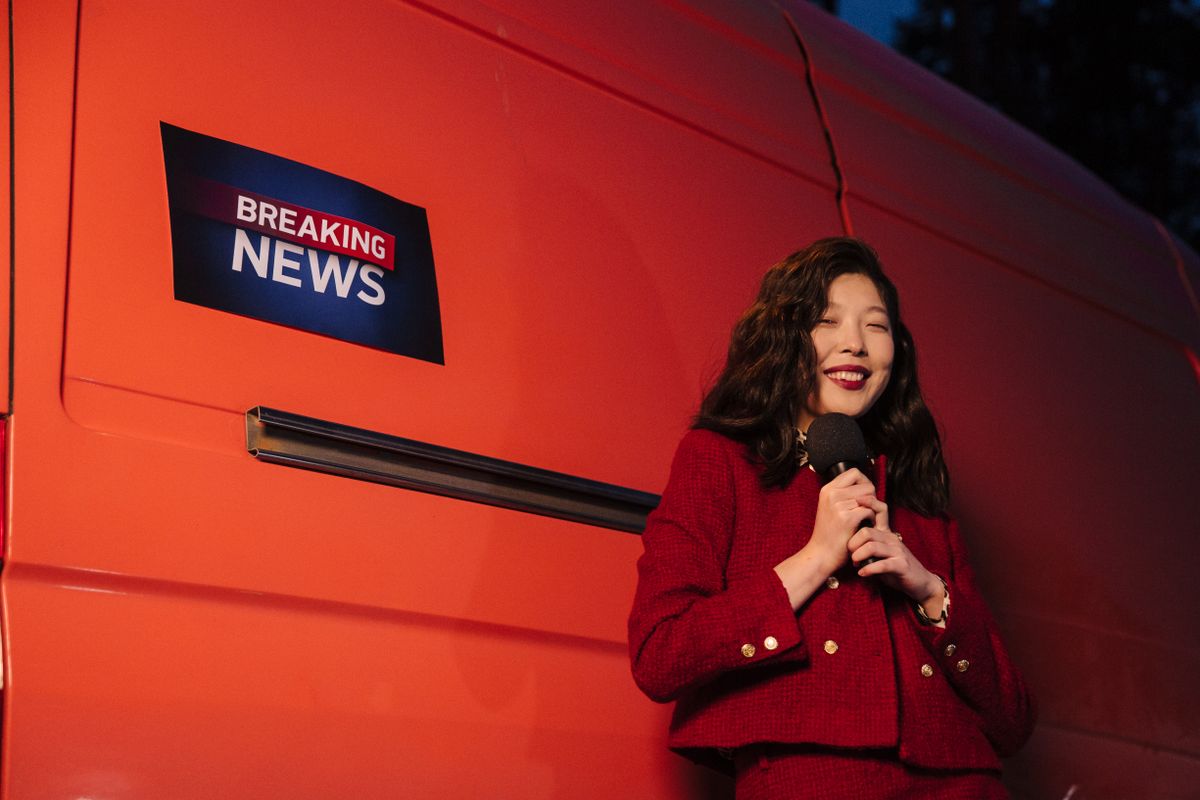
On April 10, 2023, Aaj Tak - one of India's most-watched Hindi news channels - aired their evening bulletin with a news anchor named Sana. Sana delivered the headlines with a clear voice, appropriate gestures, and professional composure. The only difference between Sana and every anchor who had appeared on Aaj Tak before: Sana does not exist. She is a fully AI-generated virtual presenter, created using deepfake-adjacent technology by synthetic media company Synthesia in partnership with the channel. India had just watched its first AI news anchor deliver live television news, and most viewers could not tell the difference.
What Is an AI News Anchor?
An AI news anchor is a computer-generated virtual presenter that reads news scripts on screen, replicating the appearance, voice, and speaking mannerisms of a human anchor. It is available 24/7, reads in multiple languages, and requires no salary, makeup, or studio time for the anchor themselves.
The technology combines several AI capabilities: neural text-to-speech synthesis (generating a natural-sounding voice from text), generative video (creating realistic facial movements, lip-sync, and expressions), and voice cloning (matching a specific person's voice characteristics). The news script - still written by human journalists - is fed into the system, and the AI anchor delivers it in seconds with a convincingly human presentation style.
This is not a chatbot or text-on-screen automation. AI news anchors create actual video footage of a virtual human presenting news, indistinguishable to casual viewing from a real presenter. The technology is both impressive as a media tool and deeply concerning as a potential vector for misinformation, which is why both how it is used and how it is regulated matter enormously.
India's AI Anchor History: From Sana to Lisa
Aaj Tak's Sana (April 2023) was the first AI news anchor deployed by a major Indian news channel. Sana was introduced for breaking news updates and digital-first content, where her 24/7 availability and zero production overhead created an attractive proposition for high-frequency news output. The channel was transparent about Sana's AI nature from the first broadcast, labeling her clearly as an AI anchor and positioning her as a technology innovation rather than a human replacement.
Odisha TV's Lisa (2023) took AI anchoring into regional language territory. Lisa reads Odia-language news - a significant development because producing 24-hour content in a regional language requires a deep bench of anchor talent that smaller regional channels often cannot sustain. An AI anchor that reads Odia fluently and is available around the clock gives smaller regional channels a production capability previously available only to large-budget national networks.
India Today Group has piloted AI-generated anchors for its digital video news output, using the technology for social media short-form news and YouTube Shorts rather than primary broadcast. This use case - high-frequency, short-format, digital-first news delivery - is where AI anchors are most immediately practical.
How AI News Anchors Are Made
Creating the Visual Identity
An AI news anchor can either be a completely synthetic character designed from scratch (like Sana), or a photorealistic clone of a real person trained on video footage (more ethically complex). Synthetic characters are built using 3D modeling and generative AI that creates a realistic human appearance without copying any specific individual. The character's visual style, skin tone, clothing, and background are designed to match the channel's visual identity.
Voice Synthesis
Text-to-speech technology has advanced dramatically through 2024 and 2025. Modern neural TTS systems produce voices that are indistinguishable from human speech for most listeners in audio-only formats. For news presentation, the system must also replicate the pacing, emphasis, and tone modulation that professional anchors use to convey importance, urgency, and information hierarchy. Companies like ElevenLabs, Play.ht, and Indian startups like Murf.ai specialize in producing news-quality synthetic voices in Hindi, Tamil, Telugu, and other Indian languages.
Lip-Sync and Facial Animation
The most technically demanding component is matching the AI's visual mouth movements to the synthesized speech in real time or near-real time. Platforms like Synthesia, D-ID, and HeyGen specialize in this layer, producing video of the virtual anchor's face with accurate lip-sync, natural blinking, and appropriate head movements. The result is a video that looks and sounds like a genuine studio broadcast.

Why Indian News Channels Are Interested in AI Anchors
The 24-Hour News Economy
India has over 400 active news channels. The competition for viewer attention, particularly in regional languages, is intense. A 24/7 broadcast requires a minimum of 5 to 6 anchors per show format to cover all shifts, weekends, and sick days. For regional language channels operating in smaller markets with limited anchor talent pools, AI anchors solve a genuine staffing challenge.
Cost Economics
A senior TV news anchor in India earns Rs. 30,000 to Rs. 3 lakh per month depending on channel size and visibility. The cost of an AI anchor system - subscription to a synthetic media platform plus production overhead - runs approximately Rs. 5 to 15 lakh per year at the current market rate. For high-frequency, low-context bulletin delivery (weather, stock tickers, traffic updates, sports scores), the economic case for AI anchors in secondary time slots is strong.
Multilingual Scale
India has 22 officially recognized languages and hundreds of dialects. A major news event needs coverage in Hindi, English, Tamil, Telugu, Marathi, Bengali, Gujarati, and Kannada simultaneously. AI anchors can be trained to present in all of these languages with a single script input, providing multilingual coverage that no human anchor team could match in speed or cost.
The Global Context: India Is Not First
India's adoption of AI news anchors follows a global trend that started earlier in other markets. China's Xinhua news agency deployed an AI anchor as early as 2018, calling it a "tireless" 24-hour news presenter. Kuwait News launched "Fedha", an AI anchor, in 2023. In South Korea, MBN deployed an AI clone of anchor Kim Joo-ha in 2020. The technology is now widespread enough that several countries are actively debating regulatory frameworks for its use in journalism.
Cost comparison: A 24-hour regional news channel in India employs 8 to 12 anchors with total salary costs of Rs. 40 to Rs. 80 lakh per year for the anchor function alone. An AI anchor system that handles secondary time slots and digital content costs Rs. 5 to Rs. 15 lakh per year. For channels in smaller regional markets, this is the difference between financial viability and closure.
The Serious Ethical Problems AI News Anchors Create
Disclosure and Viewer Trust
The most immediate ethical requirement is full transparency: viewers must know when they are watching an AI anchor. Aaj Tak's Sana is clearly labeled. But as the technology becomes more widespread and the quality improves, the risk of undisclosed AI anchor use grows. A viewer's relationship with a trusted news anchor - their perceived authority, familiarity, and credibility - should not be transferred to an AI without disclosure.
Deepfake News: The Dangerous Use Case
The same technology that creates AI news anchors can be used to create deepfake videos of real journalists saying things they never said. This has already happened internationally - real anchors from BBC, NDTV, and other channels have had their likenesses used in deepfake scam videos without consent. The existence of legitimate AI anchor technology provides cover for malicious uses of the same techniques. Distinguishing authorized synthetic media from unauthorized deepfakes becomes increasingly difficult as quality improves.
Impact on Journalists
Indian journalist unions have raised concerns about AI anchors displacing human presenters, particularly in entry-level positions where young journalists build their on-air careers. The Editors Guild of India and the National Union of Journalists have called for regulatory guidelines that clearly delineate AI anchor use from editorial functions, protecting human journalists from displacement while allowing channels to use AI for purely mechanical presentation tasks.
What Remains Irreplaceably Human in Journalism
AI anchors can deliver pre-written scripts. They cannot interview a reluctant source who trusts a specific journalist. They cannot make the real-time editorial judgment to stop a live broadcast when breaking news arrives. They cannot read the emotional temperature of a press conference or ask the follow-up question that cracks an evasive answer. The investigative, analytical, and editorial functions of journalism are entirely beyond what AI anchor technology addresses.
The best framing is that AI anchors are to television journalism what autocue technology was to the 1960s anchor: a tool that changes the mechanics of presentation without touching the substance of journalism. For media brands thinking about their digital content strategy, AI in content creation and AI-powered audience engagement tools offer complementary approaches to scaling content operations.
Growing a Media Brand or Content Business Digitally?
At Mayank Digital Labs, we help news portals, content companies, and media brands grow their digital audience through SEO, YouTube strategy, social media marketing, and AI-powered content distribution systems.
No commitment. 30-minute call to see how we can help.
Frequently Asked Questions
What is an AI news anchor and how does it work?
An AI news anchor is a computer-generated virtual presenter that reads scripted news content on screen, with realistic lip-sync, voice, and facial movements created by AI. Human journalists still write the news. The AI anchor only delivers it. Technology companies like Synthesia, D-ID, and HeyGen build the underlying platforms used by news channels.
Which Indian TV channel launched the first AI anchor?
Aaj Tak launched India's first AI news anchor, named Sana, in April 2023. The channel clearly labelled Sana as an AI anchor from the first broadcast. Odisha TV followed with Lisa, an Odia-language AI anchor. India Today Group and several regional channels have since piloted or deployed AI anchor technology for digital content.
Can viewers tell if a news anchor is AI?
Quality AI news anchors in well-lit studio settings are increasingly difficult to distinguish from humans during casual viewing. Tells include unnatural eye movement, slightly artificial facial micro-expressions, and very slight lip-sync imperfections. In low-resolution digital streams, these artifacts are nearly invisible. This is why disclosure labeling is ethically mandatory, not optional.
Will AI news anchors replace human journalists in India?
AI anchors replace the reading-from-script function of anchor presentation, not journalism. Writing stories, investigating events, conducting interviews, and making editorial decisions remain entirely human activities. The most likely outcome is that AI anchors take over routine bulletin reading in secondary time slots and digital formats, while human anchors focus on live events, interviews, and breaking news where human judgment is critical.